Alfred, Lord Tennyson
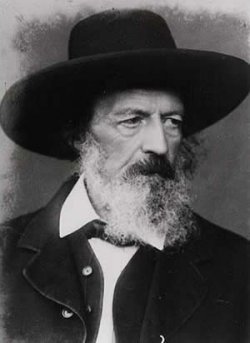 August 06, 1809 – October 06, 1892
‘Tis better to have loved and lost
Than never to have loved at all
-Alfred, Lord Tennyson, “In Memoriam A.H.H”
Drawing on his interests in medieval legend and mythology and the lush imagery championed by the Romantic poets of his youth, Alfred Tennyson became one of the most successful poets of the Victorian era. The musicality of his rhyming and his valiant and sometimes mournful subject matter made him popular in his native England. His celebrity and talent led to his appointment in 1850 as Poet Laureate of the United Kingdom after the death of the previous appointee, William Wordsworth. He held the post for more than 4 decades. His most well-known poems like “Ulysses”, “Break Break Break”, “Crossing the Bar” and “The Charge of the Light Brigade” have lent phrases and expressions to the English lexicon that are still used to this day.
In 1884, Tennyson was made Baron of Aldworth, Sussex by Queen Victoria. The Queen had long admired his work and told him that she had found great comfort in his “In Memoriam A.H.H.” in the wake of the death of Prince Albert. The beloved poet died in his home in Aldworth at the age of 83. According to the doctor by his side at the time, “Lord Tennyson has had a gloriously beautiful death.” Seems fitting. He was buried with honors in Westminster Abbey alongside his friend and contemporary, Robert Browning.
Burial
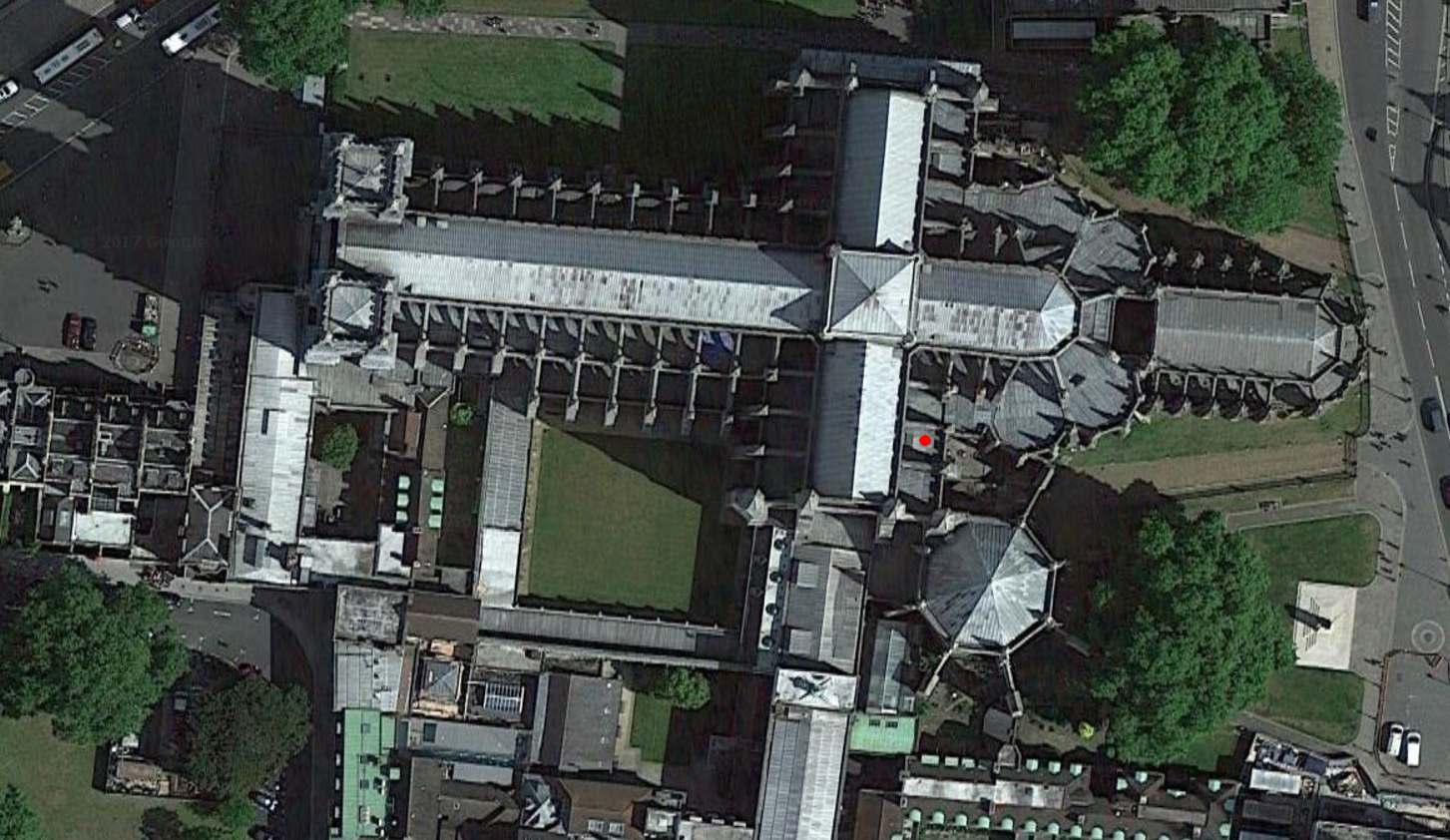
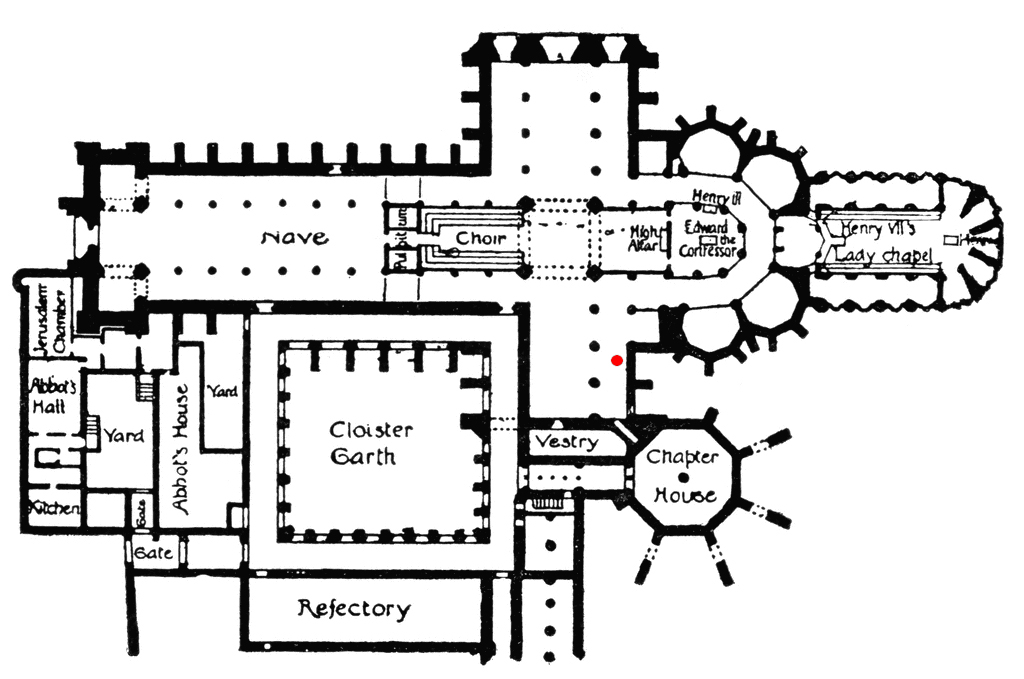
Westminster Abbey – London, UK

Specific Location
The South Transept (aka “Poets’ Corner”) – at the eastern side of this famous area, very near Chaucer’s grave. Tennyson is interred beneath the floor between Browning and a memorial to T.S. Eliot.
 Celebrity Graveland
Leave a comment