Geoffrey Chaucer
 circa 1340s – October 25, 1400
Geoffrey Chaucer is one of the earliest English poets and writers whose works and legacy endure into modern times. He spent much of his life in or adjacent to the royal court thanks to his father’s position in London. Due to his life in public service, much was recorded officially about Chaucer which is why we know so much about him more than 600 years later.
Born into a family of winemakers, Chaucer served – among other stations – as page to the Countess of Ulster, who married the son of King Edward III. He served as part of the English army during the Hundred Years’ War. And, most notably to most high school students in English-speaking literature classes…he wrote really long poems.
Chaucer’s surviving major works and dozens of short poems are now archetypical of Middle English literature. Chief among his greatest works is The Canterbury Tales. The individual stories of 24 pilgrims on the road to Canterbury Cathedral is considered a masterwork of early English verse and prose.
It is widely held that Chaucer’s writings were popular, or at least well-regarded, in his own lifetime. There is even evidence that suggests that the king himself was a fan. Chaucer died suddenly in his mid-to-late 50s (his exact birthdate is not known). Since he lived in the close of Westminster in his later years, he was awarded burial in the abbey. Some years after his death, his remains were moved to a more celebratory spot in the abbey’s South Transept; making him the very first famous interment in what would become “Poets’ Corner.” Talk about a trendsetter.
Burial
Westminster Abbey – London, UK

Specific Location
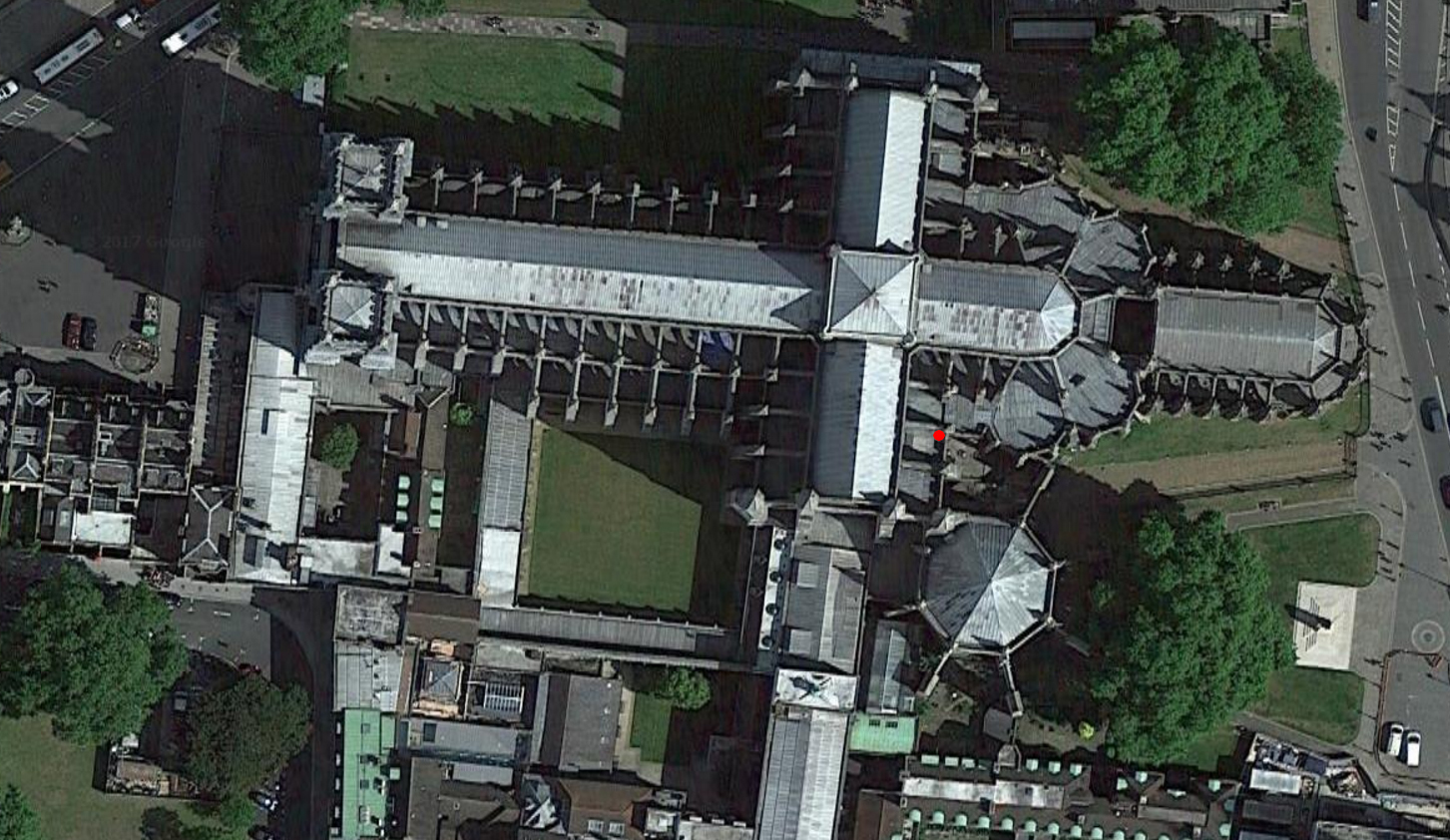
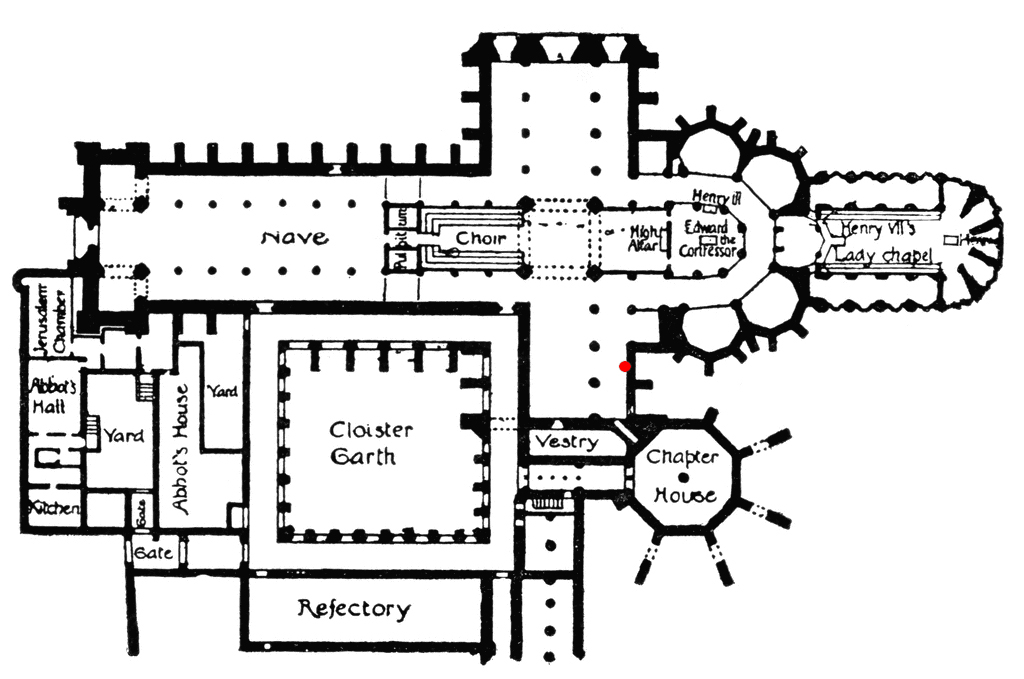
The South Transept (aka “Poets’ Corner”) – Along the eastern wall of this section.
 Celebrity Graveland
Leave a comment