Stephen Hawking
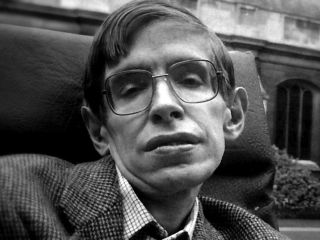 January 08, 1942 – March 14, 2018
Stephen Hawking’s story began unremarkably. As a young boy in Hertfordshire, England, Stephen played games with his friends. He built model boats and made homemade fireworks. He was, in every way, a normal kid. But, he also was profoundly interested in mathematics. He began attending his father’s alma mater, University College at Oxford at the age of 17. Since math wasn’t an available area of study, he majored in physics and chemistry.
It was immediately apparent that he was a gifted thinker, though he had to make a considerable effort to enjoy his university experience. But once he committed, he made friends, took up rowing and found interest in other subjects like music and literature. He fell in love with theoretical physics and eventually earned a degree in physics as well as a doctorate in applied mathematics and theoretical physics from Cambridge. He then went on to blow our understanding of the universe out of the proverbial water.
Hawking’s work spanned more than 50 years and covered everything from black holes to quantum mechanics. He discovered that black holes emit radiation. He also theorized that the universe could not be bound by space and time and that it was created from one initial singularity (a “big bang” if you will). You know, simple stuff. He is widely regarded as one of the top minds of the 20th century and beyond.
An extraordinary story on its own. But, the truly remarkable part about Stephen Hawking was that he did most of his best work with a monumental brain trapped in a gradually failing body.
At the age of 21, Hawking was diagnosed with amyotrophic lateral sclerosis (ALS) and was given just years to live. The condition slowly paralyzed Hawking and all throughout his career, his motor capabilities decreased. First crutches, then wheelchairs. He lost his ability to speak in the 1980s but was still able to communicate via ever-evolving alternative communication techniques.
While speaking and writing became impossible, THINKING most certainly did not. He continued to grapple with the inner workings of the universe well into his 70s. He remained a fixture on the lecture circuit – speaking through a now-iconic text-enabled voice box – for as long as he was able. He authored or co-authored dozens of books ranging from theoretical cosmology to children’s books. He appeared in films and television programs and became an instantly recognizable figure in pop-culture. In 2007, he flew aboard a zero-gravity jet in hopes to one day travel to space.
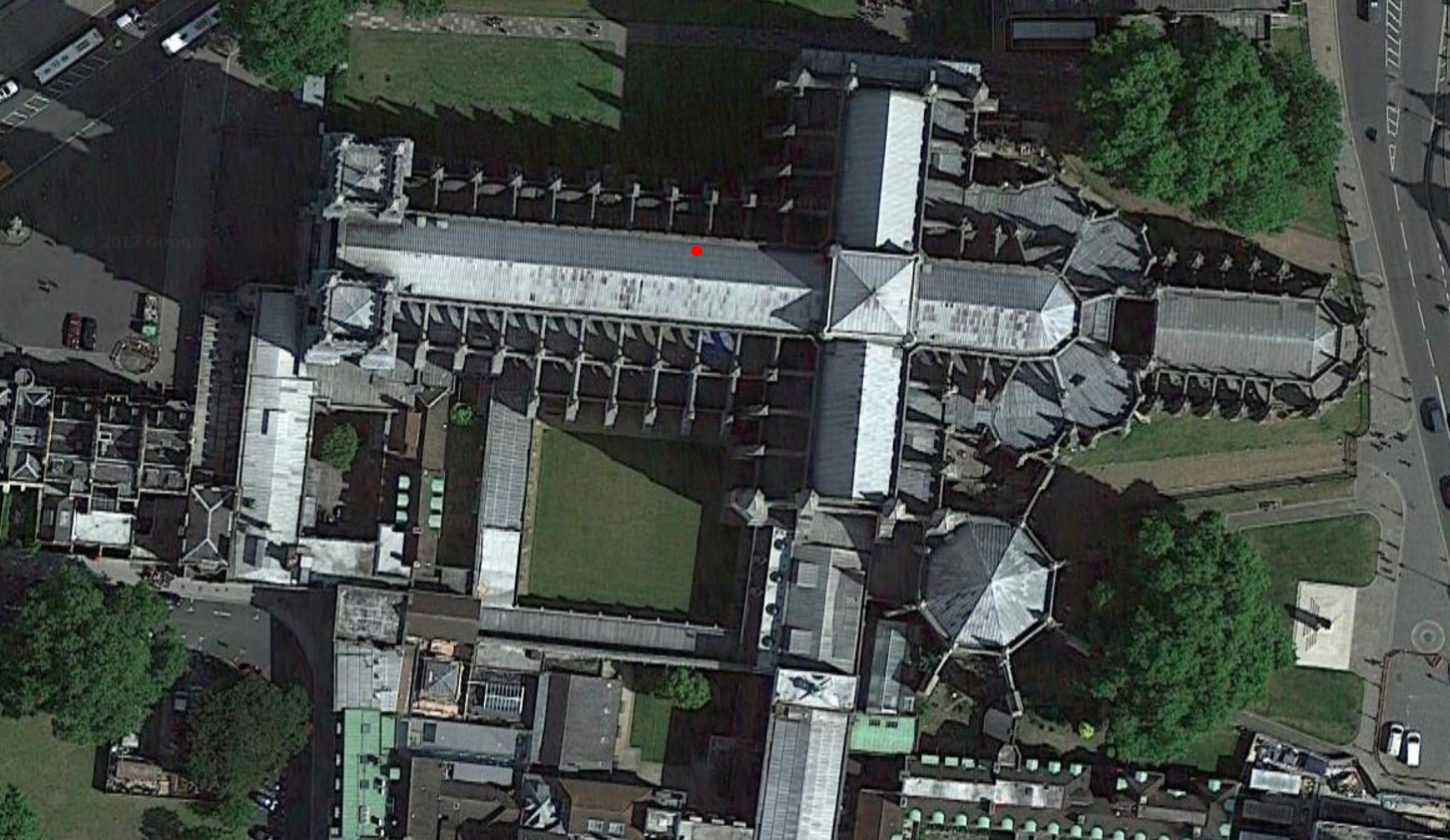
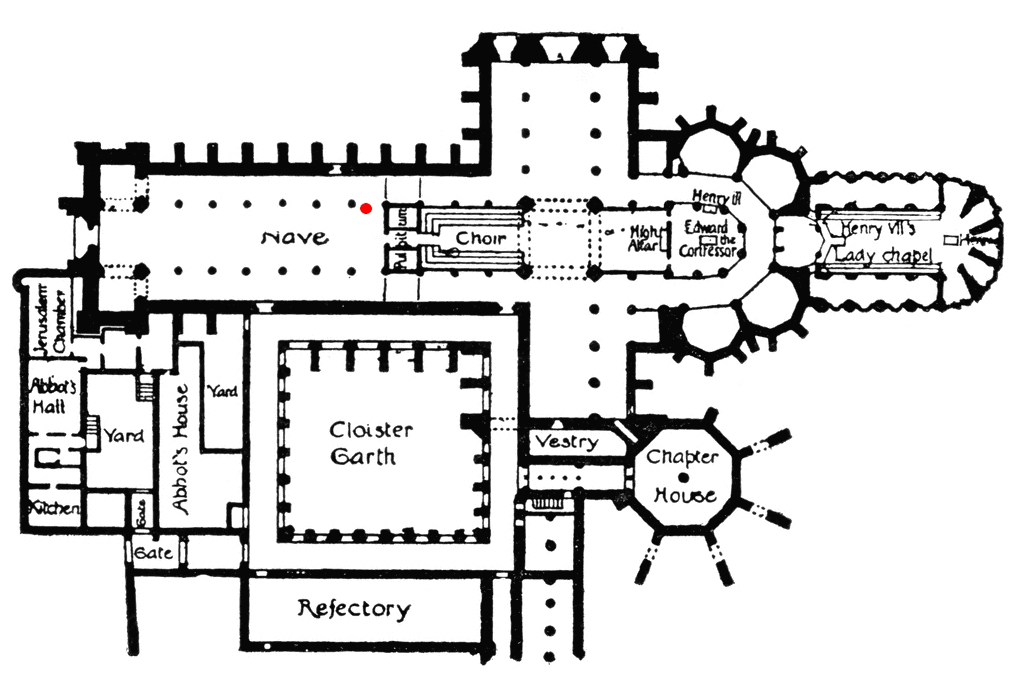
Stephen Hawking died in 2018 at he age of 76, more than half a century after his terminal diagnosis. His ashes were buried in the nave of Westminster Abbey. The equation on his marker was at his own request and represents his black hole radiation temperature equation – known colloquially as Hawking’s equation.
Burial
Westminster Abbey – London, UK

Specific Location
Nave – In the area in front of Sir Isaac Newton.
 Celebrity Graveland
Leave a comment