Louis Armstrong
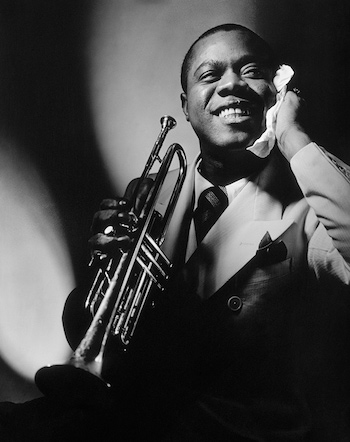 August 4, 1901 – July 6, 1971
An argument can be made – and made well – that Louis Armstrong is the single most important figure in American music. While the likes of Elvis, MJ and Aretha “merely” excelled at their respective genres, Armstrong introduced his to the world. Of course, no one person can be credited with creating jazz, but the uniquely American music genre can certainly trace its roots to New Orleans…and Louis Armstrong was right there at the start.
Born and raised in poverty in the Big Easy, Armstrong’s early life was peppered with struggle. He was arrested at the age of 11 and sent to live in a reform school for black boys. While at the desolate school, Armstrong joined the band and learned to play the cornet.
Louis quickly became good. Really good. He started playing at local clubs and on riverboats in the city. He met and played with his mentor, Joseph “King” Oliver, and before long the two were off to the booming music town of Chicago. Becoming the stand-out in Oliver’s band, Armstrong honed his skills, his performance style and learned how to make records. From Chicago, it was off to New York where he surrounded himself with talent and his recordings started selling to would-be trumpet players and fans all around the country.
During the 1920s, Armstrong found himself embedded in the Harlem Renaissance, and he found himself becoming one of the most popular musicians in America. For the decades that followed, he became known as much for his distinct singing as he did for his trumpet playing. By the 1950s. Louis Armstrong was a global phenomenon.
Known far and wide by many nicknames including “Satchmo”, “Dipper” and “Pops”, he traveled around the world as an ambassador for jazz 300+ days a year, rarely settling down anywhere. He was married 4 times, but it was his 4th wife, Lucille, who bought a house in the Corona neighborhood of Queens, New York…finally giving Armstrong a place to call home.
While his life and career were not without controversy – some black artists resented his willingness to kowtow to white audiences – his stature was undeniable. Whatever his mindset, he managed to break down all kinds of racial barriers. He was the first black performer to receive top billing in a movie with 1934’s Pennies from Heaven. He won Grammys. He collaborated with fellow greats like Ella Fitzgerald and Duke Ellington. He appeared in more than 30 movies, composed more than 50 jazz standards and released more than 100 recordings. He’s a member of multiple music halls of fame. He was, quite literally, a once-in-history talent and personality.
Louis Armstrong, in failing health and despite doctors’ orders, played and plotted live shows until the end. He died in his sleep in his home in Corona in 1971. Though he himself claimed to have been born in 1900, most signs point toward a birthdate of August 4, 1901.
Burial
Flushing Cemetery – Queens NY
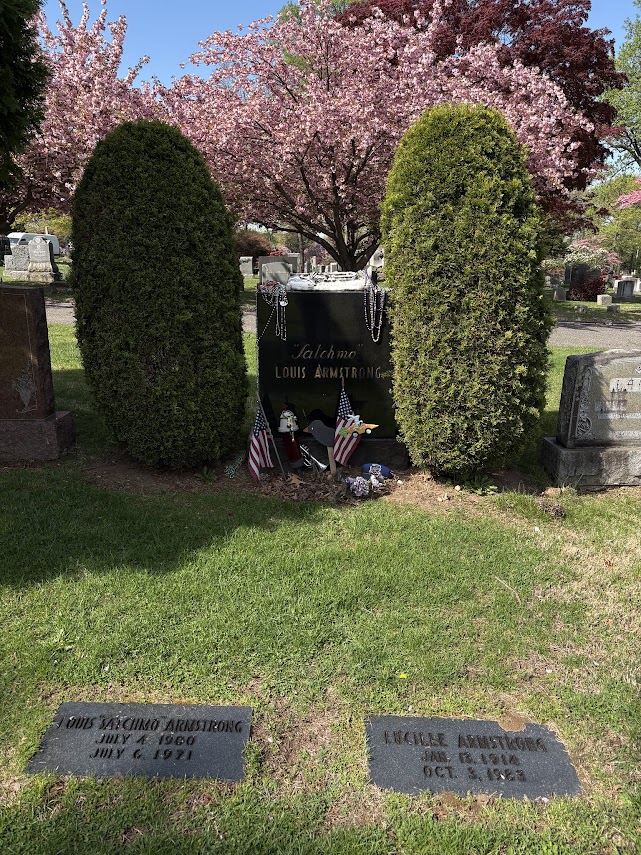
Specific Location
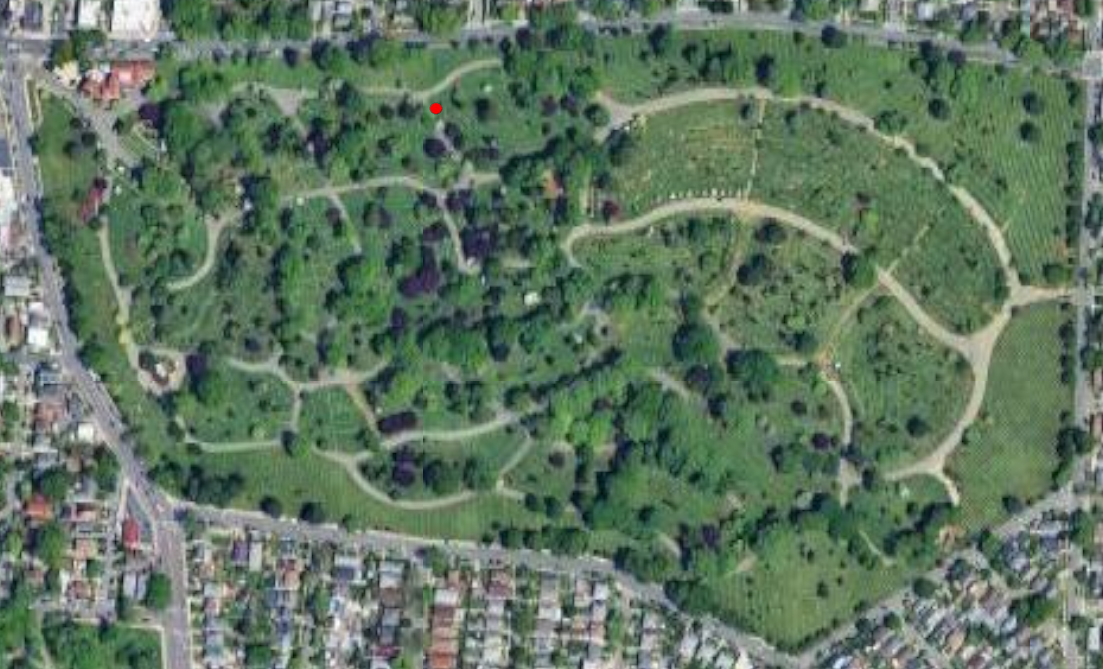
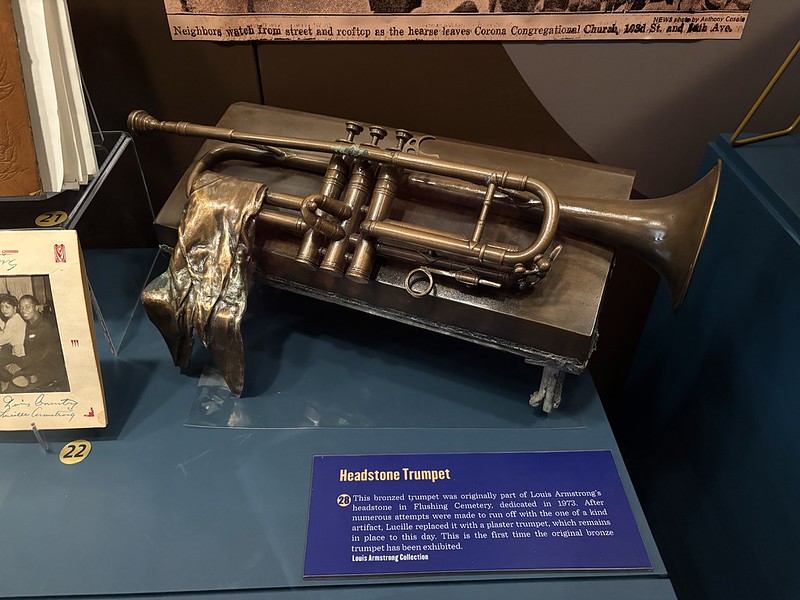
At the northwest corner of Section 9, the back of Louis’ black marker is visible from the road. Just look for the plaster trumpet on top. The original bronze trumpet from his grave can still be seen in the nearby Louis Armstrong House Jazz Museum.


Leave a Reply