Archive for Poets

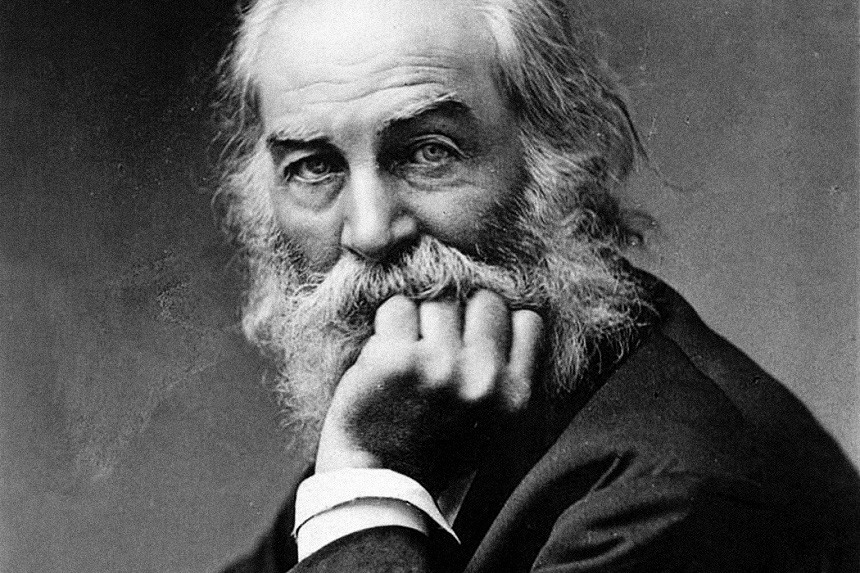
Walt Whitman

Posted in Harleigh Cemetery with tags , , on September 23, 2024 by Cade

May 31, 1819 – March 26, 1892

Attempting to list out the most influential American poets will consistently return a handful of regular contenders. This number can often pale in comparison to other countries with longer histories, but any list you produce will include monumental names like Dickinson, Frost, Emerson, Poe, etc. And EVERY list will feature one name at the top: Walt Whitman

Whitman grew up in New York and dropped out of school to work as a young man to help his family. One of his early jobs was in a print shop. He continued this work and pursued a career in newspapers and eventually began writing his own copy. Opinions, reviews of operas, essays, he dabbled in anything that interested him. He became a successful editor and was able to publish his own serialized novel in 1852. By the mid-1850s, Whitman had decided he wanted to try poetry. He set out to create the great American epic poem and in 1855, published Leaves of Grass, his defining masterwork.

Continue reading

Samuel Johnson

Posted in Westminster Abbey with tags , , on August 19, 2024 by Cade

September 18, 1709 – December 13, 1784

Samuel Johnson was – and remains – one of the most influential English writers of all time. With works ranging from poems to a literal dictionary, Johnson’s contributions to British literature ran far, wide and very, very deep. Sometimes referred to as “Dr. Johnson”, he wrote in a number of genres including, drama, essays, biographies, literary criticism and sermons. He is widely regarded as “the most distinguished man of letters in English history.”

Continue reading

Charles Baudelaire

Posted in Montparnasse Cemetery with tags , , on July 15, 2024 by Cade

April 09, 1821 – August 31, 1867

To call Charles Baudelaire a “Romantic” poet would be a significant undersell. For sure, he was one of the preeminent French poets of the 19th century and drew heavily on his Romantic forebears, but one does not take the beauty, imagination and natural ideals of the Romantic movement and forge a new movement based on exoticism and excess by resting on the laurels of the past. Largely credited with helping found the Decadent literary movement, Baudelaire was as widely regarded for his poems as he was for his lavish lifestyle.

Continue reading

Robert Browning

Posted in Westminster Abbey with tags , , on November 27, 2023 by Cade

May 07, 1812 – December 12, 1889

Robert Browning was one of the leading poets and writers in Victorian England. Specializing in long-form poems and dramatic monologues, Browning directly influenced generations of writers ranging from Oscar Wilde to Ezra Pound to Stephen King. In addition to poems like The Pied Piper of Hamelin, My Last Duchess and Porphyria’s Lover, he also wrote a number of plays and songs. 1869’s verse novel The Ring and the Book was his most successful and lucrative work during his lifetime and earned him international acclaim.

Continue reading

Geoffrey Chaucer

Posted in Westminster Abbey with tags , , on October 9, 2023 by Cade

circa 1340s – October 25, 1400

Geoffrey Chaucer is one of the earliest English poets and writers whose works and legacy endure into modern times. He spent much of his life in or adjacent to the royal court thanks to his father’s position in London. Due to his life in public service, much was recorded officially about Chaucer which is why we know so much about him more than 600 years later.

Born into a family of winemakers, Chaucer served – among other stations – as page to the Countess of Ulster, who married the son of King Edward III. He served as part of the English army during the Hundred Years’ War. And, most notably to most high school students in English-speaking literature classes…he wrote really long poems.

Continue reading

Thomas Hardy

Posted in Westminster Abbey with tags , , on September 25, 2023 by Cade

June 02, 1840 – January 11, 1928

You can take the boy out of Wessex, but you can’t take the Wessex out of the boy.

Victorian novelist, poet and lover of old buildings, Thomas Hardy, wrote often about the fantasized English county of Wessex in his works. Though the places he referenced were real (including his home county of Dorset,) he recalled the archaic name “Wessex” to incorporate it all into an idealized whole. The themes and arcs of his stories played heavily on the country life of his youth. When he relocated to London in his 20s, the stark difference between the metropolitan privilege of the capital and the struggles of his beloved rural stomping grounds became a central tenant in his writings.

Continue reading

Samuel Beckett

Posted in Montparnasse Cemetery with tags , , , on September 11, 2023 by Cade

April 13, 1906 – December 22, 1989

Samuel Barclay Beckett was born in 1906 in Foxrock, Ireland, just outside of Dublin. He studied literature at Trinity College. He played cricket. He traveled. He wrote. While teaching in Paris – a city that would eventually become his full-time home – Beckett met fellow Irish author James Joyce and their interactions and relationship would eventually solidify the direction of Beckett’s literary career. By the time he was 40, he realized that, while Joyce pushed for knowledge as fuel for his creativity, Beckett himself was better suited to embrace his own “ignorance”. This decision freed Beckett up to concentrate his writings on the everyday absurdity and bleakness of life.

Continue reading

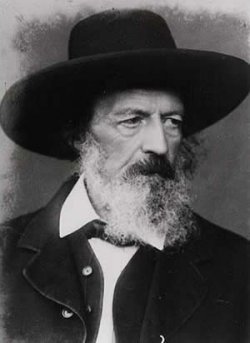
Alfred, Lord Tennyson

Posted in Westminster Abbey with tags , , on July 24, 2023 by Cade

tennyson1August 06, 1809 – October 06, 1892

‘Tis better to have loved and lost
Than never to have loved at all
-Alfred, Lord Tennyson, “In Memoriam A.H.H”

Drawing on his interests in medieval legend and mythology and the lush imagery championed by the Romantic poets of his youth, Alfred Tennyson became one of the most successful poets of the Victorian era. The musicality of his rhyming and his valiant and sometimes mournful subject matter made him popular in his native England. His celebrity and talent led to his appointment in 1850 as Poet Laureate of the United Kingdom after the death of the previous appointee, William Wordsworth. He held the post for more than 4 decades. His most well-known poems like “Ulysses”, “Break Break Break”, “Crossing the Bar” and “The Charge of the Light Brigade” have lent phrases and expressions to the English lexicon that are still used to this day. Continue reading

William Carlos Williams

Posted in Hillside Cemetery (Lyndhurst) with tags , on October 12, 2020 by Cade

September 17, 1883 – March 4, 1963

“The purpose of an artist, whatever it is, is to take the life, whatever he sees, and to raise it up to an elevated position where it has dignity.”

William Carlos Williams was a literary superhero: Mild-mannered physician by day, generation-influencing poet by night. Williams was raised in a Dominican/Puerto Rican home in New Jersey where mostly Spanish was spoken. But, it was his deft use of the English language that became his legacy. A leader in the Modernist and Imagist movements of poetry, Williams’ economical use of words in popular poems such as “The Red Wheelbarrow” and “This Is Just To Say” became imagist classics…though he and his contemporaries, like Ezra Pound, had “moved on” from the movement by the time the poems were published. Continue reading

Emily Dickinson

Posted in West Cemetery (MA) with tags , , on July 15, 2019 by Cade

dickinson1
December 10, 1830 – May 15, 1886

The Merriam-Webster dictionary defines MELANCHOLY as “depression of spirits dejection”

See also: Emily Dickinson

Emily Elizabeth Dickinson was born, lived her entire life, and died in Amherst, Massachusetts. From a young age, Emily was troubled by and consumed with the idea of death. Losses throughout her life – beginning with her cousin and close friend, Sophia, when she was 14 – piled on and Dickinson withdrew more and more from social life as the decades went on. She was known later in life as a recluse who corresponded copiously with friend and relatives both near and far – some of whom she never met in person. Continue reading