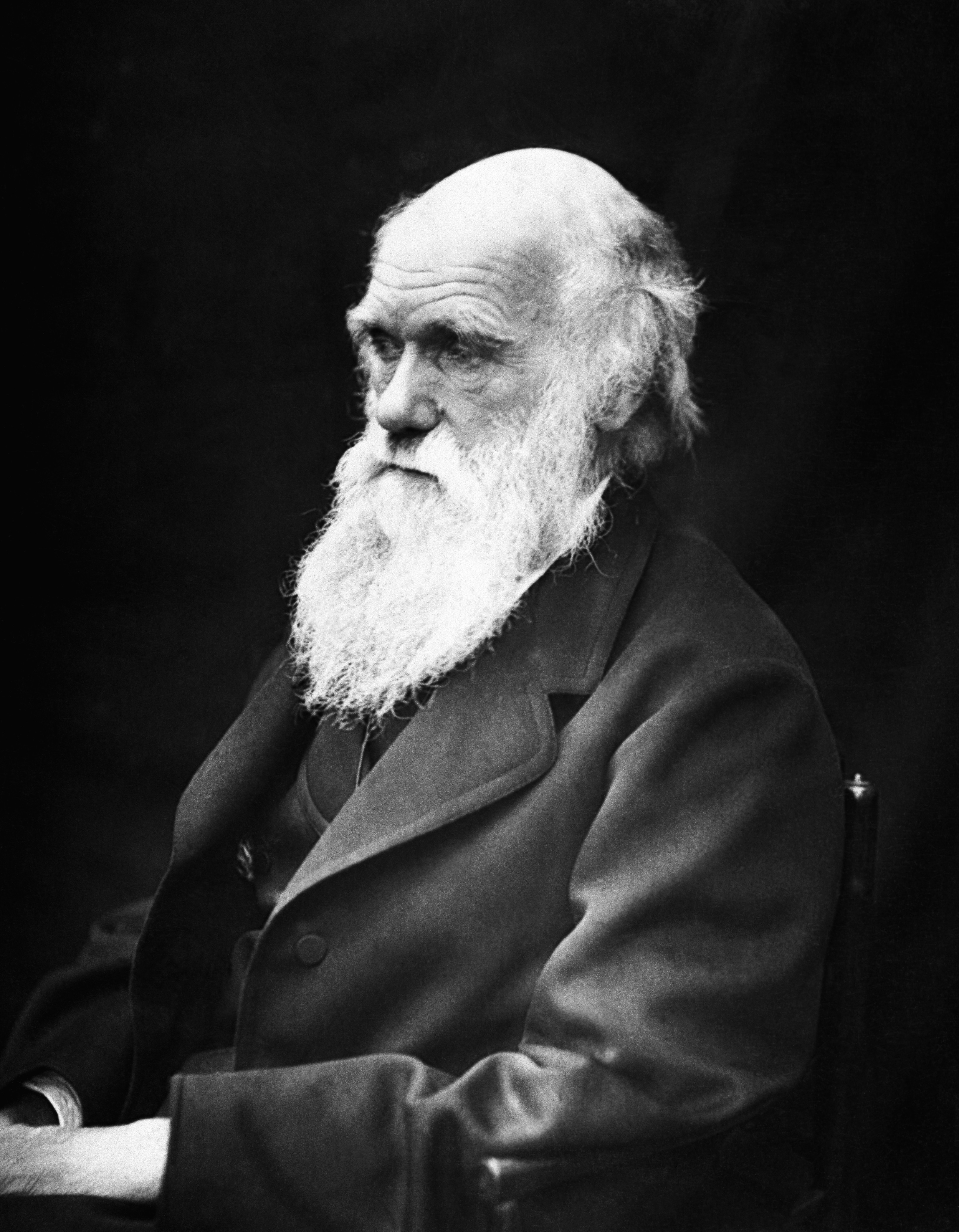
 February 12, 1809 – April 19, 1882
Geologist, naturalist and biologist, Charles Darwin’s life is extremely well documented. From his early interest in insects and exploring theology in nature to his famed journeys aboard HMS Beagle, Darwin’s contributions to human study, thought and progress are virtually unrivaled.
His five-year voyage on the Beagle from 1831-1836 was arguably his most consequential endeavor. His geological study and collection of natural history specimens from the coasts of South America, Africa, Australia and islands along the way – including Mauritius and, famously, the Galapagos islands – became the bedrock upon which he would change the way humans view the world. Darwin journaled extensively during the journey and his discoveries. He originally set out to write a book about the geological history of these coastlines, but altered his focus after several encounters with fossilized animals and observations in related species of what he would go on to deem “natural selection.”

 Celebrity Graveland