Archive for Westminster Abbey

William Wilberforce

Posted in Westminster Abbey with tags on January 27, 2025 by Cade

August 24, 1759 – July 29, 1833

The OG social justice warrior, William Wilberforce was a British politician and social reformer whose religious conversion directed him toward causes to right injustice. He was most notably a staunch advocate and very public face for the campaign to abolish slavery in Britain.

Wilberforce was raised and educated in Yorkshire. He attended St. John’s College at Cambridge where he devoted more time to the typical extracurricular activities of the average college boy than to his studies. Despite his general lack of desire to be in school (he had inherited money from his family and didn’t necessarily need to go to university), he received a degree and embarked on a career in politics.
Continue reading

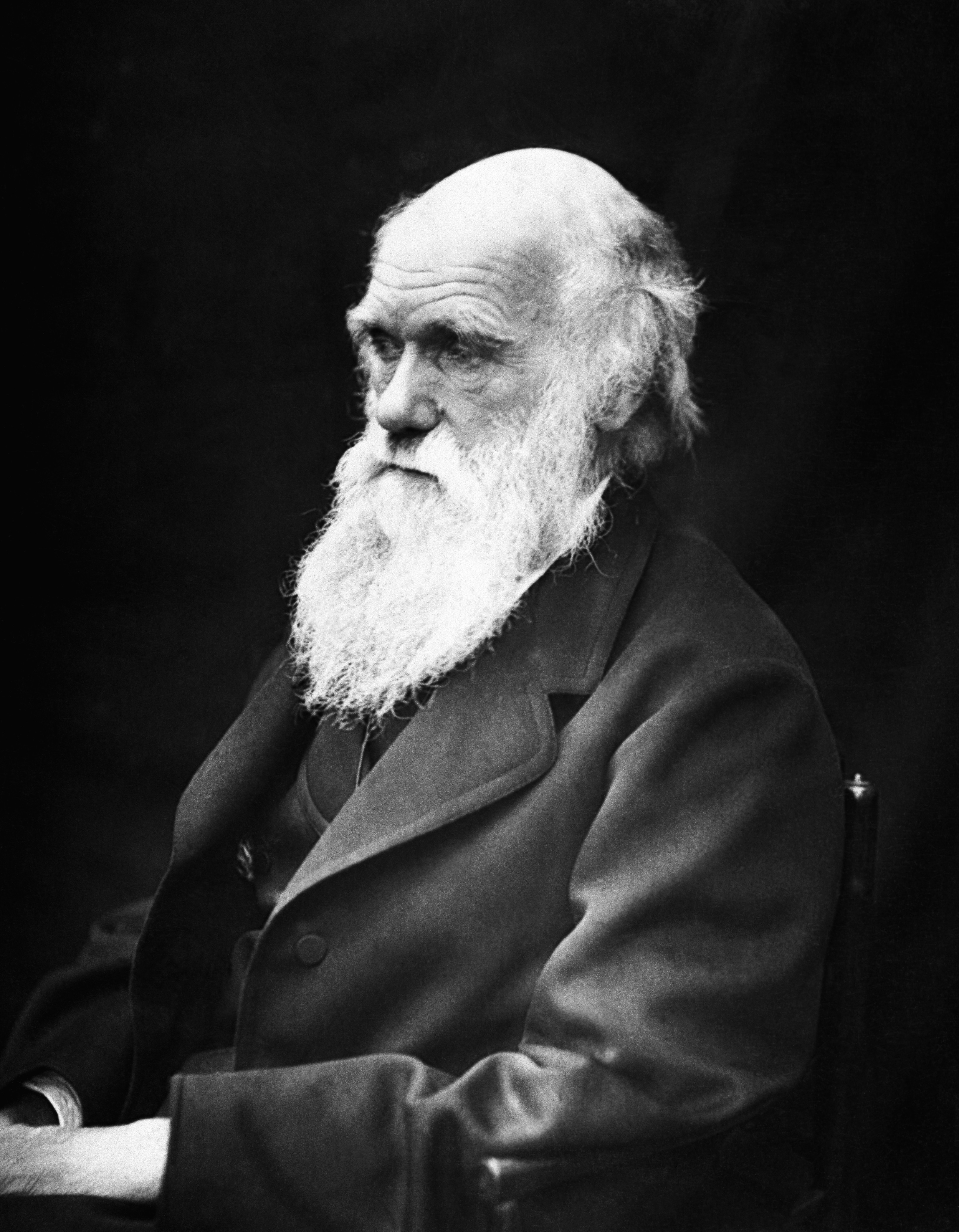
Charles Darwin

Posted in Westminster Abbey with tags , , on October 7, 2024 by Cade

February 12, 1809 – April 19, 1882

Geologist, naturalist and biologist, Charles Darwin’s life is extremely well documented. From his early interest in insects and exploring theology in nature to his famed journeys aboard HMS Beagle, Darwin’s contributions to human study, thought and progress are virtually unrivaled.

His five-year voyage on the Beagle from 1831-1836 was arguably his most consequential endeavor. His geological study and collection of natural history specimens from the coasts of South America, Africa, Australia and islands along the way – including Mauritius and, famously, the Galapagos islands – became the bedrock upon which he would change the way humans view the world. Darwin journaled extensively during the journey and his discoveries. He originally set out to write a book about the geological history of these coastlines, but altered his focus after several encounters with fossilized animals and observations in related species of what he would go on to deem “natural selection.”

Continue reading

Samuel Johnson

Posted in Westminster Abbey with tags , , on August 19, 2024 by Cade

September 18, 1709 – December 13, 1784

Samuel Johnson was – and remains – one of the most influential English writers of all time. With works ranging from poems to a literal dictionary, Johnson’s contributions to British literature ran far, wide and very, very deep. Sometimes referred to as “Dr. Johnson”, he wrote in a number of genres including, drama, essays, biographies, literary criticism and sermons. He is widely regarded as “the most distinguished man of letters in English history.”

Continue reading

Rudyard Kipling

Posted in Westminster Abbey with tags , on May 27, 2024 by Cade

December 30, 1865 – January 18, 1936

Joseph Rudyard Kipling was and English writer born in Bombay, British India.

Not satisfied with that base level of international poly-citizenship, Kipling would spend much of his life traveling and exploring the world abroad. British custom at the time required that Rudyard and his sister spend their formative years in England. Their parents stayed in India, so the children bounced back and forth for much of their young lives.

Kipling loved to write, but his education stopped short of attending university. Instead, he went to work at a newspaper in India where he published dozens of short stories – a genre he helped popularize – over the course of several years. He returned to London by way of a 7 month journey through Asia and North America. His time in Japan and America, in particular, proved to be influential to him both personally and creatively. While in New York, Kipling dropped in on an unsuspecting Mark Twain and the two enjoyed a productive conversation.

Continue reading

Isaac Newton

Posted in Westminster Abbey with tags , on April 8, 2024 by Cade

December 25, 1642 – March 20, 1726

It would be easy to just say that Sir Isaac Newton invented gravity, the tides, comets and colored light. It would be wrong…but it would be easy.

Newton is widely regarded as one of the greatest scientific minds in human history and one of the principle minds behind what would become the Enlightenment. A genius, he used mathematics to explain everything from philosophy to the movement of the planets. He created the first reflecting telescope to study the movement of comets and other celestial objects. He determined, via prism, that the light spectrum contained an array of colors that were intrinsic to the white light itself. Love it or hate it, he invented Calculus.

And, as legend has it, he used observations of an apple tree in his garden to formulate his theory of gravitation.

Continue reading

George Frederic Handel

Posted in Westminster Abbey with tags , on February 26, 2024 by Cade

handel1February 23, 1684  – April 14, 1759

Before Beethoven, before Mozart, before Tchaikovsky…there was Handel. One of the big three composers of the pre-Classical Baroque era (along with Bach and Vivaldi) Georg Friederich Händel quickly became known in his Brandendburg-Prussian hometown (modern-day Germany). Before the age of 10, he was discovered playing a church organ and his formal music education commenced. Marked by distinctively harmonic – if LONG – cantatas and church compositions, Handel’s early career led him to Hamburg and then to Italy, where he composed sacred church music when classic Italian opera was not allowed by the Pope.

Continue reading

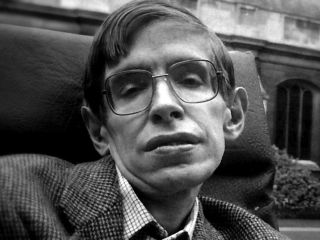
Stephen Hawking

Posted in Westminster Abbey with tags , , on December 18, 2023 by Cade

January 08, 1942 – March 14, 2018

Stephen Hawking’s story began unremarkably. As a young boy in Hertfordshire, England, Stephen played games with his friends. He built model boats and made homemade fireworks. He was, in every way, a normal kid. But, he also was profoundly interested in mathematics. He began attending his father’s alma mater, University College at Oxford at the age of 17. Since math wasn’t an available area of study, he majored in physics and chemistry.

It was immediately apparent that he was a gifted thinker, though he had to make a considerable effort to enjoy his university experience. But once he committed, he made friends, took up rowing and found interest in other subjects like music and literature. He fell in love with theoretical physics and eventually earned a degree in physics as well as a doctorate in applied mathematics and theoretical physics from Cambridge. He then went on to blow our understanding of the universe out of the proverbial water.

Continue reading

Robert Browning

Posted in Westminster Abbey with tags , , on November 27, 2023 by Cade

May 07, 1812 – December 12, 1889

Robert Browning was one of the leading poets and writers in Victorian England. Specializing in long-form poems and dramatic monologues, Browning directly influenced generations of writers ranging from Oscar Wilde to Ezra Pound to Stephen King. In addition to poems like The Pied Piper of Hamelin, My Last Duchess and Porphyria’s Lover, he also wrote a number of plays and songs. 1869’s verse novel The Ring and the Book was his most successful and lucrative work during his lifetime and earned him international acclaim.

Continue reading

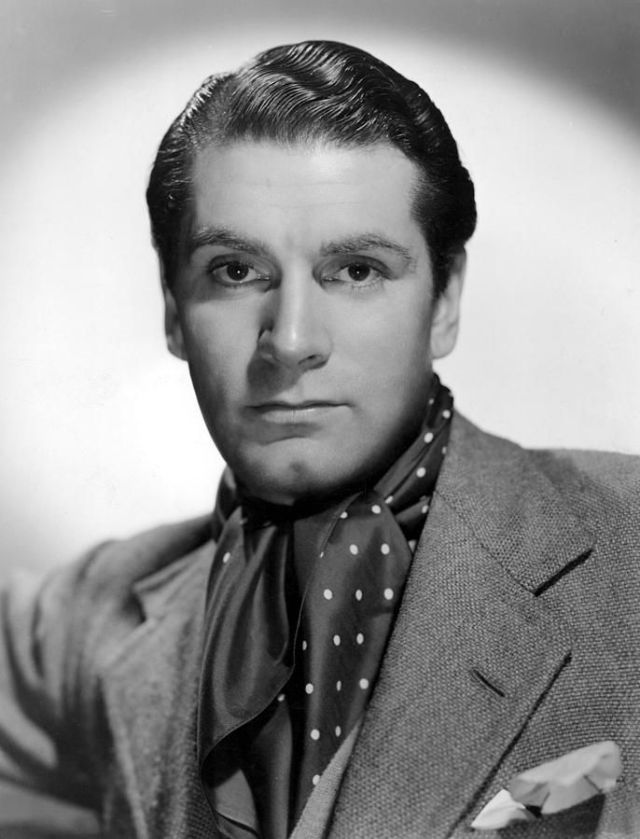
Laurence Olivier

Posted in Westminster Abbey with tags , on October 23, 2023 by Cade

May 22, 1907 – July 11, 1989

Despite his legendary reputation, nothing came easy for Laurence Olivier during his 65 years in the business known as “Show.” Spurred to pursue acting by his father, young Laurence eventually settled into a stage career – often shunning work in film and (eventually) television – for the live artform he felt allowed him to shine brightest. Alongside friend, Ralph Richardson, and rival, John Gielgud, Olivier is regarded as one the greatest actors of his generation.

Continue reading

Geoffrey Chaucer

Posted in Westminster Abbey with tags , , on October 9, 2023 by Cade

circa 1340s – October 25, 1400

Geoffrey Chaucer is one of the earliest English poets and writers whose works and legacy endure into modern times. He spent much of his life in or adjacent to the royal court thanks to his father’s position in London. Due to his life in public service, much was recorded officially about Chaucer which is why we know so much about him more than 600 years later.

Born into a family of winemakers, Chaucer served – among other stations – as page to the Countess of Ulster, who married the son of King Edward III. He served as part of the English army during the Hundred Years’ War. And, most notably to most high school students in English-speaking literature classes…he wrote really long poems.

Continue reading