Archive for Westminster Abbey

Thomas Hardy

Posted in Westminster Abbey with tags , , on September 25, 2023 by Cade

June 02, 1840 – January 11, 1928

You can take the boy out of Wessex, but you can’t take the Wessex out of the boy.

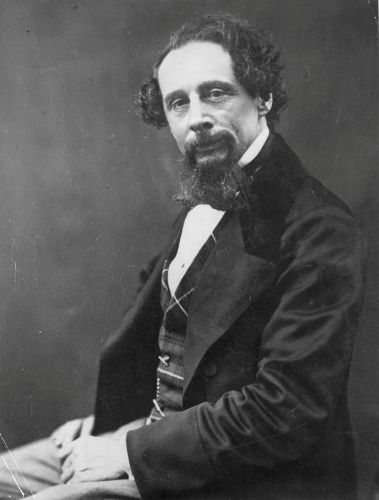
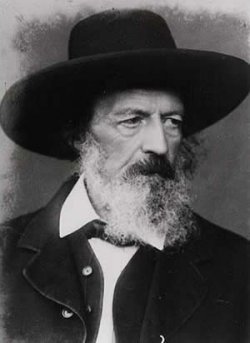
Victorian novelist, poet and lover of old buildings, Thomas Hardy, wrote often about the fantasized English county of Wessex in his works. Though the places he referenced were real (including his home county of Dorset,) he recalled the archaic name “Wessex” to incorporate it all into an idealized whole. The themes and arcs of his stories played heavily on the country life of his youth. When he relocated to London in his 20s, the stark difference between the metropolitan privilege of the capital and the struggles of his beloved rural stomping grounds became a central tenant in his writings.
Continue reading

Charles Dickens

Posted in Westminster Abbey with tags , on August 14, 2023 by Cade

February 07, 1812 – June 09, 1870

Charles Dickens is perhaps the greatest – certainly the most famous – English novelist of all time. His 1843 novella, A Christmas Carol, has been turned into no fewer than 3 million1 stage productions and movies. And that is all by itself with no mention of his other gargantuan hits like Oliver Twist, A Tale of Two Cities, David Copperfield, Great Expectations, Nicholas Nickleby and dozens of others. His stable of characters, the settings of his stories and the richness of his writing created a new adjective in the English language: Dickensian. Something that is Dickensian is said to be the absolute epitome of common life in Victorian England.

Continue reading

Alfred, Lord Tennyson

Posted in Westminster Abbey with tags , , on July 24, 2023 by Cade

tennyson1August 06, 1809 – October 06, 1892

‘Tis better to have loved and lost
Than never to have loved at all
-Alfred, Lord Tennyson, “In Memoriam A.H.H”

Drawing on his interests in medieval legend and mythology and the lush imagery championed by the Romantic poets of his youth, Alfred Tennyson became one of the most successful poets of the Victorian era. The musicality of his rhyming and his valiant and sometimes mournful subject matter made him popular in his native England. His celebrity and talent led to his appointment in 1850 as Poet Laureate of the United Kingdom after the death of the previous appointee, William Wordsworth. He held the post for more than 4 decades. His most well-known poems like “Ulysses”, “Break Break Break”, “Crossing the Bar” and “The Charge of the Light Brigade” have lent phrases and expressions to the English lexicon that are still used to this day. Continue reading