Archive for Woodlawn Cemetery (Bronx)

George M. Cohan

Posted in Woodlawn Cemetery (Bronx) with tags , on November 20, 2013 by Cade

cohan1July 3, 1878 – November 5, 1942

George Michael Cohan was – to put it simply (and to steal mercilessly from many before me) – “the man who owned Broadway.” The son of Irish Catholic performers, Cohan grew up on stage as a member of the family vaudeville act, The Four Cohans. At an early age, he began writing his own skits…and then his own songs. Fast forward a few years and little George had over 300 songs to his credit, including classics like “The Yankee Doodle Boy,” “Give My Regards to Broadway” and “Over There.” Continue reading

Herman Melville

Posted in Woodlawn Cemetery (Bronx) with tags , on October 7, 2013 by Cade

melville1August 1, 1819 – September 28, 1891

…for there is no folly of the beast of the earth which is not infinitely outdone by the madness of men.

Herman Melville enjoyed a modest amount of success as a writer in the first half of the 19th Century.  But, it was his novel about a man obsessed with a white whale that wrote his name into the history books…even if it was not celebrated fully until after his death.  Moby Dick; or, The Whale is the epic story of a sea captain wrestling with hate and madness and the crew who are dragged along on his vengeful pursuit. It is one of the titans of classic American literature and has given us over 150 years of analogy, characters and great names and archetypes like Ahab, Ishmael and Queequeg. And, I guess rather directly, it’s also responsible for Starbucks. So…yay, books!

Continue reading

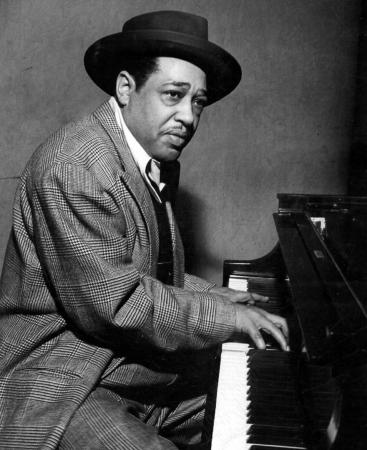
Duke Ellington

Posted in Woodlawn Cemetery (Bronx) with tags , , on October 1, 2013 by Cade
ellington1

April 29, 1899 – May 24, 1974

Edward Kennedy “Duke” Ellington began playing piano at the age of 7 and never looked back. He wrote his first song at 15 and went on to become one of the most influential and prolific artists in American music at large, let alone within the genre with which he was most closely associated: Jazz. Nicknamed “Duke” because of his swagger and the way he dressed – even at a young age – Ellington led his orchestra for nearly a half century. He gained national exposure while playing on the radio from Harlem’s famed Cotton Club in the late 1920s. He wrote and recorded songs at a near unprecedented pace. He worked with greats in all genres from Frank Sinatra (Francis A. & Edward K.) to Louis Armstrong  and constantly stretched himself into new musical territory.

Continue reading

Miles Davis

Posted in Woodlawn Cemetery (Bronx) with tags , on September 23, 2013 by Cade

mdavis1May 26, 1926 – September 28, 1991

I could go on and on about the impact that Miles Dewey Davis III had on not only jazz, but popular music in general.  I could list his accolades and triumphant successes like Milestones, Bitches Brew, On the Corner and his magnum opus, Kind of Blue.  I could talk about the Grammys. I could talk about the cocaine use, short temper and contentious relationships with the press, critics and fellow musicians (like fellow Hard-Bopper, Thelonious Monk).  But, why bother when we can both just sit and spend the next 9 1/2 minutes listening to this: Continue reading

Irving Berlin

Posted in Woodlawn Cemetery (Bronx) with tags , on September 22, 2013 by Cade

berlin1May 11, 1888 – September 22, 1989

To simply refer to Irving Berlin as a “composer” is like calling the Pacific Ocean a “puddle.” Berlin’s 70 year career broke when the Russian (Belarusian)-American songwriter wrote “Alexander’s Ragtime Band.” The song became an international sensation and launched Irving from the stoops of Tin Pan Alley into the stratosphere…where he thrived for more than half a century. Many of the songs Berlin would write would become so common place to future generations, that it’s hard to imagine that someone actually wrote them.  “White Christmas,” “Puttin’ On The Ritz,” “There’s No Business Like Show Business,” “Easter Parade,” “Happy Holiday” and “God Bless America” to name just a few. It is said he wrote more than 1,500 songs. Continue reading