Archive for Writers

Marcel Proust

Posted in Père Lachaise Cemetery with tags , on October 28, 2024 by Cade

July 10, 1871 – November 18, 1922

If you have one shot at a novel that vaults you into the discussion of “most influential authors of the century”…you had better make it good. You had better make it epic. You had better make it monumental.

Marcel Proust did just that.

Published over the course of more than a dozen years and seven volumes, Proust’s monumental novel, À la Recherche du Temps Perdu (In Search of Lost Time), became one of the first and lasting great works of the 20th Century. The themes he explored over the novel’s 4000+ pages ranged from memory and homosexuality to vanity and despair and changed the trajectory of the modern novel.
Continue reading
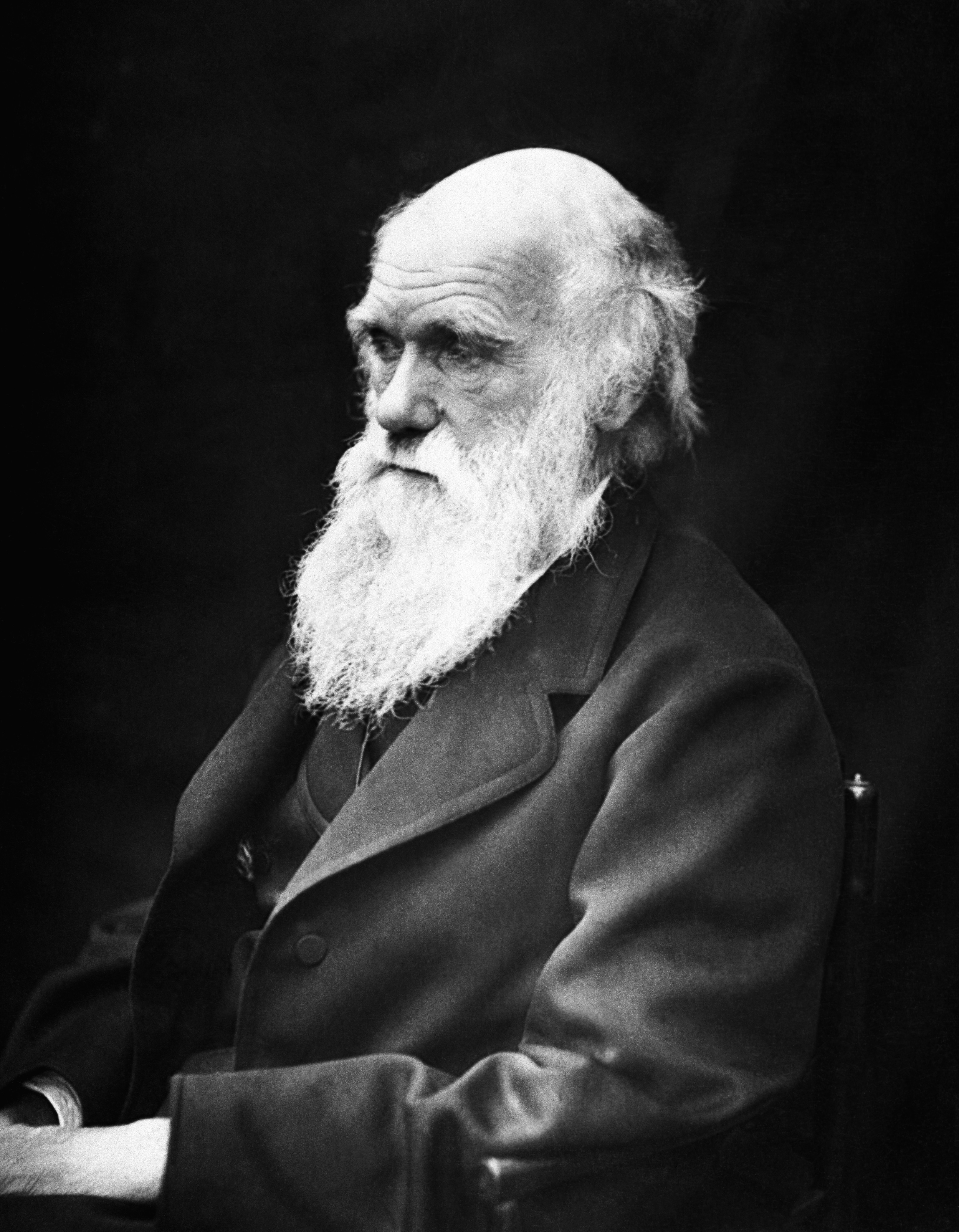
Charles Darwin

Posted in Westminster Abbey with tags , , on October 7, 2024 by Cade

February 12, 1809 – April 19, 1882

Geologist, naturalist and biologist, Charles Darwin’s life is extremely well documented. From his early interest in insects and exploring theology in nature to his famed journeys aboard HMS Beagle, Darwin’s contributions to human study, thought and progress are virtually unrivaled.

His five-year voyage on the Beagle from 1831-1836 was arguably his most consequential endeavor. His geological study and collection of natural history specimens from the coasts of South America, Africa, Australia and islands along the way – including Mauritius and, famously, the Galapagos islands – became the bedrock upon which he would change the way humans view the world. Darwin journaled extensively during the journey and his discoveries. He originally set out to write a book about the geological history of these coastlines, but altered his focus after several encounters with fossilized animals and observations in related species of what he would go on to deem “natural selection.”

Continue reading

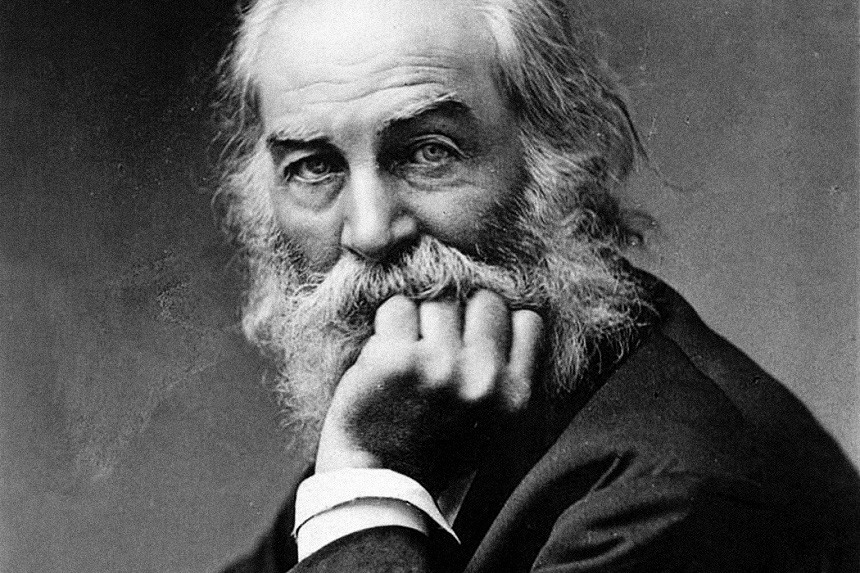
Walt Whitman

Posted in Harleigh Cemetery with tags , , on September 23, 2024 by Cade

May 31, 1819 – March 26, 1892

Attempting to list out the most influential American poets will consistently return a handful of regular contenders. This number can often pale in comparison to other countries with longer histories, but any list you produce will include monumental names like Dickinson, Frost, Emerson, Poe, etc. And EVERY list will feature one name at the top: Walt Whitman

Whitman grew up in New York and dropped out of school to work as a young man to help his family. One of his early jobs was in a print shop. He continued this work and pursued a career in newspapers and eventually began writing his own copy. Opinions, reviews of operas, essays, he dabbled in anything that interested him. He became a successful editor and was able to publish his own serialized novel in 1852. By the mid-1850s, Whitman had decided he wanted to try poetry. He set out to create the great American epic poem and in 1855, published Leaves of Grass, his defining masterwork.

Continue reading

Samuel Johnson

Posted in Westminster Abbey with tags , , on August 19, 2024 by Cade

September 18, 1709 – December 13, 1784

Samuel Johnson was – and remains – one of the most influential English writers of all time. With works ranging from poems to a literal dictionary, Johnson’s contributions to British literature ran far, wide and very, very deep. Sometimes referred to as “Dr. Johnson”, he wrote in a number of genres including, drama, essays, biographies, literary criticism and sermons. He is widely regarded as “the most distinguished man of letters in English history.”

Continue reading

Charles Baudelaire

Posted in Montparnasse Cemetery with tags , , on July 15, 2024 by Cade

April 09, 1821 – August 31, 1867

To call Charles Baudelaire a “Romantic” poet would be a significant undersell. For sure, he was one of the preeminent French poets of the 19th century and drew heavily on his Romantic forebears, but one does not take the beauty, imagination and natural ideals of the Romantic movement and forge a new movement based on exoticism and excess by resting on the laurels of the past. Largely credited with helping found the Decadent literary movement, Baudelaire was as widely regarded for his poems as he was for his lavish lifestyle.

Continue reading

Gertrude Stein

Posted in Père Lachaise Cemetery with tags , on June 3, 2024 by Cade

February 3, 1874 – July 27, 1946

Novelist, poet and playwright, Gertrude Stein, was born in Pennsylvania to a affluent, upper-middle class family. As a young child, Stein’s family moved to Europe (Vienna and Paris, to be precise) and her parents wanted to instill a strong sense of European life and sensibility in them.

It worked.
Continue reading

Rudyard Kipling

Posted in Westminster Abbey with tags , on May 27, 2024 by Cade

December 30, 1865 – January 18, 1936

Joseph Rudyard Kipling was and English writer born in Bombay, British India.

Not satisfied with that base level of international poly-citizenship, Kipling would spend much of his life traveling and exploring the world abroad. British custom at the time required that Rudyard and his sister spend their formative years in England. Their parents stayed in India, so the children bounced back and forth for much of their young lives.

Kipling loved to write, but his education stopped short of attending university. Instead, he went to work at a newspaper in India where he published dozens of short stories – a genre he helped popularize – over the course of several years. He returned to London by way of a 7 month journey through Asia and North America. His time in Japan and America, in particular, proved to be influential to him both personally and creatively. While in New York, Kipling dropped in on an unsuspecting Mark Twain and the two enjoyed a productive conversation.

Continue reading

Émile Zola

Posted in The Pantheon with tags , on May 6, 2024 by Cade

April 02, 1840 – September 29, 1902

French author, journalist and playwright, Émile Zola, is widely regarded as the preeminent writer in the Naturalism movement in literature. With more than 30 works to his credit, Zola was one of the most prominent writers of his time. A large percentage of his books centered around multiple generations of a single family living in Napoleon III’s France.

His naturalistic portrayals of common people and his negative depictions of real-life political figures led Zola to a life of activism in addition to his writing. He became an outspoken proponent of the liberalization of France and his vocal critiques gained him a lot of enemies in the public sphere.

He was tried for criminal libel and forced to flee to England for a time.

And he may or may not have been murdered.

Continue reading

George Eliot

Posted in Highgate Cemetery with tags , on March 25, 2024 by Cade

November 22, 1819 – December 22, 1880

What’s in a name?

Born Mary Anne Evans – but known more prominently by her pen name – George Eliot was a Victorian novelist known for her depictions of rural English life and the intertwining themes of politics and humanism. Like contemporaries Charles Dickens and Thomas Hardy, Eliot became very popular thanks in part to her vivid accounts of Victorian life, specifically the countryside in which her books took place.

But, her writing was probably the most Victorian thing about Mary Anne Evans (who also went by “Mary Ann” and “Marian” at various points of her life). The rest of her life was anything but the buttoned-up ideal of the time.

Continue reading

Susan Sontag

Posted in Montparnasse Cemetery with tags , on March 4, 2024 by Cade

January 16, 1933 – December 28, 2004

Susan Sontag was an American novelist and essayist whose criticism covered a wide range of topics throughout the 1960s, ’70s and 80s. Her breakout work was 1964’s essay Notes on ‘Camp’ which popularized “camp” as an aesthetic sensibility. She went on to write Against Interpretation, On Photography and Illness as Metaphor as well as a number of novels and other fictional works. Sontag was also a filmmaker and occasionally directed theatre…including a production of Samuel Beckett’s Waiting for Godot in a war-torn theatre in Bosnia in 1994. She was a prolific activist who wrote and spoke out about subjects like the Vietnam war, feminism, human rights and the AIDS epidemic of the ’80s.

Continue reading